
PAID SEARCH MANAGEMENT
Data-driven PPC built for ecommerce store growth
Reach the right customers at the right time with VRankOne’s ROI-focused ecommerce PPC management service. From keyword research and campaign structuring to ad copy and ongoing optimization, every decision is driven by performance.
Trusted by growing ecommerce brands








Get a Free PPC Consultation
Tell us about your store and ad goals, and a senior strategist will get back to you with a tailored plan.
We fix the problems behind poor PPC performance
PPC campaigns getting clicks but no leads? Traffic landing on your page but not buying? We've worked with enough ecommerce brands across the country to know why. Here's how we solve it and drive real results.
The problems
- Broad-match spend leaking into irrelevant queries with no negative-keyword discipline.
- Agencies optimizing for clicks and blended ROAS, not margin or profit.
- Account structure built once at launch, never revisited as the catalog changes.
- Reporting that shows spend and clicks, not revenue or margin.
- Generic account management that ignores SKU-level margin, seasonality and inventory.
- Feed errors and disapproved products silently burning Shopping/PMax budget.
- One platform's attribution decides the budget, hiding what's actually driving purchases.
- Rotating junior account managers with no continuity in account history.
What VRankOne does
- Weekly search-term mining feeding a structured negative-keyword list across every campaign.
- Bids and budgets tied to margin and revenue per SKU, not blended ROAS alone.
- Campaign and ad group architecture rebuilt around your actual catalog, revisited every quarter.
- Reporting tied to revenue and margin by campaign, in plain language your team can act on.
- Budget and bids reallocated by SKU margin, seasonality, and real-time stock status.
- Continuous feed audits catching disapprovals and attribute errors before they drain spend.
- Platform attribution cross-checked against GA4 and first-party data before reallocating spend.
- Senior strategist ownership right from day one, not a rotating account manager.
What our ecommerce paid search service covers
Your Free Proposal, a Click Away
Most agencies hand you a proposal that follows the same template they send every prospect: a fixed package tier, a standard percentage-of-spend fee and language that could apply to any account. We don't work that way. Before anything gets written, a senior strategist looks at your account structure, your catalog, and your current campaigns to find where the real opportunity is, so the proposal you get back is built around your business, not a pricing sheet designed for anyone filling out the form.
- Reviewed and built by a senior strategist, not generated from a template
- Scoped around your actual catalog size and SKU spread
- Priced against your budget and goals, instead of a fixed percentage-of-spend fee
- Focused on where your current spend is already being wasted and how we can optimize that
Account Setup & Structure
In our 12+ years of setting up PPC campaigns, we’ve seen most ecommerce PPC accounts aren't actually built around the catalog the brands are selling. Quite often, a new campaign gets bolted onto whatever ad group structure was set up at launch, Shopping and Search end up competing for the same budget with no clear split, and the account hierarchy rarely gets revisited even as the catalog doubles in size. The budget quietly leaks into low-margin SKUs this way, while the products that should be funded stay under-supported. At VRankOne, we rebuild the account architecture around your actual catalog instead of layering campaigns onto whatever structure already exists. Here's what that looks like:
- Full account audit and restructure across Search, Shopping, and Performance Max for ecommerce catalogs
- Campaign and ad group architecture segmented by SKU, category, and margin, not just by product type
- Conversion tracking and feed structure reviewed so bid data reflects real revenue, not just clicks
- Budget allocation set by SKU-level margin and inventory status, not spread evenly across the catalog
- Match-type and negative-keyword strategy rebuilt to match current search behavior, not launch-day assumptions
Keyword Strategy
Keyword lists on most ecommerce accounts tend to grow by accumulation rather than design. This includes broad match getting added for "reach," branded terms being mixed into the same campaigns as generic ones and search term reports that nobody's actually mined in months. That's usually where the real budget leak lives, quietly funding queries that were never going to convert. At VRankOne, every query your budget touches is deliberate, built around transactional intent, protected brand terms, and the competitors genuinely worth conquesting and not just the ones that seemed obvious on day one.Here's what includes in our keyword strategy:
- Transactional-intent keyword targeting mapped to your actual catalog and margin over generic category terms
- Dedicated brand protection campaigns to defend impression share against competitors bidding on your name
- Competitor conquesting campaigns built around where you can realistically win share
- Ongoing search term mining feeding negative keywords back into the account every week, rather than only once at setup
- Match-type strategy split by intent stage, so broad match earns its budget instead of quietly leaking it
Ad Copy & Creative
From Responsive Search Ads to Performance Max asset groups, our senior copywriters write every headline, description, and sitelink, with Sukanya Seal, co-founder and copy supervisor, leading the team. Before drafting, we understand your products, the pain points they solve, and the real objections your target audience has before they click “buy.” That groundwork separates copy that scores well on ad strength from copy that earns the click and carries the buyer through to purchase. We test every asset against real performance data and refine based on what's actually driving conversions. Whether the goal is top-of-funnel awareness or bottom-of-funnel conversion, we write the creative copy and direct the visual execution so both work toward the same objective instead of pulling in different directions.
- Human-written headlines and descriptions, built around real product research and audience pain points. No room for AI-generated ad copy.
- Continuous A/B testing across headline and description combinations to find what actually converts
- Sitelinks, callouts, and structured snippets written with the same care as primary ad copy
- Creative direction aligned with copy for both TOF awareness, MOF consideration and BOF conversion campaigns
- Ad copy refined against live performance data, adjusted as search behavior and seasonality shift
Shopping & Performance Max
We start every Shopping and PMax engagement with a full feed audit, not a bid adjustment and this covers cleaning up missing attributes, rewriting titles around real search behavior, and fixing disapproval before they silently cap reach. From there, we build custom labels around margin and inventory priority so budget follows profitability, segment listing groups by category and performance tier instead of running one catch-all campaign and feed PMax real audience signals and creative assets so the algorithm has actual context to work with, not just a product feed to guess from.This is what it looks like:
- Full Merchant Center feed audit catching missing attributes, disapprovals, and GTIN mismatches before they cap reach
- Title and description testing built around actual search behavior and not manufacturer copy pasted straight from the catalog
- Custom labels structured around margin and inventory priority, so budget follows profitability
- Listing group segmentation by category and performance tier, replacing a single catch-all campaign
- Audience signals and creative assets built into PMax so the algorithm has real context, not just a product feed to guess from
Bid Strategy & Budget Pacing
We build bid strategy and budget pacing around SKU and category-level margin data, not a single account-wide ROAS target, because a campaign can hit its target and still burn budget on products that barely turn a profit. We structure portfolio bid strategies by profitability tier, so the budget moves toward what's genuinely making money rather than what's simply easiest to convert. We ensure Quality Score gets protected by keeping landing pages and PDPs tightly aligned to ad intent, while continuously managing negative keywords instead of letting them accumulate. We also review pacing weekly so every rupee shifts toward what's working in real time. In short, we give you a leaner account that spends less to earn the same revenue and margin that improves even when overall spend stays flat.
- Budget shifted toward high-margin SKUs, improving blended profitability without increasing total spend
- Wasted spend on low-intent queries cut through continuous negative keyword management
- Stronger Quality Scores lowering cost-per-click as landing pages stay aligned with ad intent
- Portfolio bid strategies driving profitability up across tiers, not just headline ROAS
- Weekly reallocation compounding gains by consistently funding what's converting right now
Tracking & Reporting
We've seen enough ecommerce accounts to know that a dashboard full of clicks and impressions rarely tells you what actually drove revenue, especially once iOS privacy changes and cookie restrictions started leaving real gaps in platform-reported data. So we set up conversion tracking properly from the start, through GA4 and enhanced conversions, and cross-check it against first-party data instead of trusting one platform's self-reported numbers at face value. Every decision we make, from bid adjustments to budget shifts, ties back to that real conversion data and we report it in clear, easy-to-understand language your team can actually act on.
- Conversion tracking built through GA4 and enhanced conversions, closing the gaps platform data leaves behind
- Cross-platform attribution checked against first-party data before we shift budget on its word alone
- Ongoing audits catching tracking drift, tag misfires and conversion discrepancies before they skew decisions
- Reporting written in plain language, tied to revenue and margin, not just clicks and impressions
- Regular strategy reviews where we walk your team through what the data actually means for your business
Your Free Proposal, a Click Away
Most agencies hand you a proposal that follows the same template they send every prospect: a fixed package tier, a standard percentage-of-spend fee and language that could apply to any account. We don't work that way. Before anything gets written, a senior strategist looks at your account structure, your catalog, and your current campaigns to find where the real opportunity is, so the proposal you get back is built around your business, not a pricing sheet designed for anyone filling out the form.
- Reviewed and built by a senior strategist, not generated from a template
- Scoped around your actual catalog size and SKU spread
- Priced against your budget and goals, instead of a fixed percentage-of-spend fee
- Focused on where your current spend is already being wasted and how we can optimize that
Account Setup & Structure
In our 12+ years of setting up PPC campaigns, we’ve seen most ecommerce PPC accounts aren't actually built around the catalog the brands are selling. Quite often, a new campaign gets bolted onto whatever ad group structure was set up at launch, Shopping and Search end up competing for the same budget with no clear split, and the account hierarchy rarely gets revisited even as the catalog doubles in size. The budget quietly leaks into low-margin SKUs this way, while the products that should be funded stay under-supported. At VRankOne, we rebuild the account architecture around your actual catalog instead of layering campaigns onto whatever structure already exists. Here's what that looks like:
- Full account audit and restructure across Search, Shopping, and Performance Max for ecommerce catalogs
- Campaign and ad group architecture segmented by SKU, category, and margin, not just by product type
- Conversion tracking and feed structure reviewed so bid data reflects real revenue, not just clicks
- Budget allocation set by SKU-level margin and inventory status, not spread evenly across the catalog
- Match-type and negative-keyword strategy rebuilt to match current search behavior, not launch-day assumptions
Keyword Strategy
Keyword lists on most ecommerce accounts tend to grow by accumulation rather than design. This includes broad match getting added for "reach," branded terms being mixed into the same campaigns as generic ones and search term reports that nobody's actually mined in months. That's usually where the real budget leak lives, quietly funding queries that were never going to convert. At VRankOne, every query your budget touches is deliberate, built around transactional intent, protected brand terms, and the competitors genuinely worth conquesting and not just the ones that seemed obvious on day one.Here's what includes in our keyword strategy:
- Transactional-intent keyword targeting mapped to your actual catalog and margin over generic category terms
- Dedicated brand protection campaigns to defend impression share against competitors bidding on your name
- Competitor conquesting campaigns built around where you can realistically win share
- Ongoing search term mining feeding negative keywords back into the account every week, rather than only once at setup
- Match-type strategy split by intent stage, so broad match earns its budget instead of quietly leaking it
Ad Copy & Creative
From Responsive Search Ads to Performance Max asset groups, our senior copywriters write every headline, description, and sitelink, with Sukanya Seal, co-founder and copy supervisor, leading the team. Before drafting, we understand your products, the pain points they solve, and the real objections your target audience has before they click “buy.” That groundwork separates copy that scores well on ad strength from copy that earns the click and carries the buyer through to purchase. We test every asset against real performance data and refine based on what's actually driving conversions. Whether the goal is top-of-funnel awareness or bottom-of-funnel conversion, we write the creative copy and direct the visual execution so both work toward the same objective instead of pulling in different directions.
- Human-written headlines and descriptions, built around real product research and audience pain points. No room for AI-generated ad copy.
- Continuous A/B testing across headline and description combinations to find what actually converts
- Sitelinks, callouts, and structured snippets written with the same care as primary ad copy
- Creative direction aligned with copy for both TOF awareness, MOF consideration and BOF conversion campaigns
- Ad copy refined against live performance data, adjusted as search behavior and seasonality shift
Shopping & Performance Max
We start every Shopping and PMax engagement with a full feed audit, not a bid adjustment and this covers cleaning up missing attributes, rewriting titles around real search behavior, and fixing disapproval before they silently cap reach. From there, we build custom labels around margin and inventory priority so budget follows profitability, segment listing groups by category and performance tier instead of running one catch-all campaign and feed PMax real audience signals and creative assets so the algorithm has actual context to work with, not just a product feed to guess from.This is what it looks like:
- Full Merchant Center feed audit catching missing attributes, disapprovals, and GTIN mismatches before they cap reach
- Title and description testing built around actual search behavior and not manufacturer copy pasted straight from the catalog
- Custom labels structured around margin and inventory priority, so budget follows profitability
- Listing group segmentation by category and performance tier, replacing a single catch-all campaign
- Audience signals and creative assets built into PMax so the algorithm has real context, not just a product feed to guess from
Bid Strategy & Budget Pacing
We build bid strategy and budget pacing around SKU and category-level margin data, not a single account-wide ROAS target, because a campaign can hit its target and still burn budget on products that barely turn a profit. We structure portfolio bid strategies by profitability tier, so the budget moves toward what's genuinely making money rather than what's simply easiest to convert. We ensure Quality Score gets protected by keeping landing pages and PDPs tightly aligned to ad intent, while continuously managing negative keywords instead of letting them accumulate. We also review pacing weekly so every rupee shifts toward what's working in real time. In short, we give you a leaner account that spends less to earn the same revenue and margin that improves even when overall spend stays flat.
- Budget shifted toward high-margin SKUs, improving blended profitability without increasing total spend
- Wasted spend on low-intent queries cut through continuous negative keyword management
- Stronger Quality Scores lowering cost-per-click as landing pages stay aligned with ad intent
- Portfolio bid strategies driving profitability up across tiers, not just headline ROAS
- Weekly reallocation compounding gains by consistently funding what's converting right now
Tracking & Reporting
We've seen enough ecommerce accounts to know that a dashboard full of clicks and impressions rarely tells you what actually drove revenue, especially once iOS privacy changes and cookie restrictions started leaving real gaps in platform-reported data. So we set up conversion tracking properly from the start, through GA4 and enhanced conversions, and cross-check it against first-party data instead of trusting one platform's self-reported numbers at face value. Every decision we make, from bid adjustments to budget shifts, ties back to that real conversion data and we report it in clear, easy-to-understand language your team can actually act on.
- Conversion tracking built through GA4 and enhanced conversions, closing the gaps platform data leaves behind
- Cross-platform attribution checked against first-party data before we shift budget on its word alone
- Ongoing audits catching tracking drift, tag misfires and conversion discrepancies before they skew decisions
- Reporting written in plain language, tied to revenue and margin, not just clicks and impressions
- Regular strategy reviews where we walk your team through what the data actually means for your business
Ad Formats We Run
Paid search formats that turn ad spend into sales
You’ll never hear us say “let’s deploy every format” right from the beginning. Instead, we match campaign types, bidding strategies, audiences, and creative to your products, funnel stage, and commercial goals. From query-level intent to first-party audiences and remarketing signals, we continuously optimize the account around conversion quality, ROAS and profitable growth.
Responsive Search Ads
We combine intent-led keyword targeting with conversion-focused headlines and descriptions, then use performance data to refine assets, queries, and bidding toward higher-quality conversions.
Dynamic Search Ads
We use your website's content and search demand to capture relevant queries beyond your keyword set, while controlling page targeting and exclusions to uncover incremental revenue without sacrificing efficiency.
Shopping Ads
We optimize product feeds, titles, attributes, and campaign segmentation so your products appear for high-commercial-intent searches and attract clicks more likely to convert.
Performance Max
We combine product feeds, audience signals, creative assets, and conversion data across Google's inventory, continuously optimising toward the actions and customers most likely to generate revenue.
Demand Gen
We use visually rich creative, audience signals, and funnel-based targeting across Google's discovery environments to create demand, nurture consideration, and move high-value prospects toward conversion.
Display / Remarketing
We reconnect with users who have already interacted with your brand using audience segmentation, dynamic creative, and frequency controls to recover lost conversions and increase customer value.
RLSA
We layer first-party audience signals onto search campaigns to adjust bids and targeting for previous visitors, allowing us to prioritise users who already show stronger purchase intent.
Microsoft / Bing Ads
We extend your search coverage beyond Google by adapting keyword, audience, bidding, and shopping strategies to Microsoft's ecosystem, capturing increasing demand without simply duplicating Google campaigns.
OUR PROCESS
How we build ecommerce PPC campaigns that perform
Full Account Audit
We start by auditing your existing account structure, search term reports, and product feed to find exactly where the budget is leaking before we touch a single bid.

Margin-Led Campaign Architecture
We rebuild campaigns and ad groups around your catalog's actual SKU and margin data. We don’t follow the generic structure most accounts default to at launch.

Launch, Test, and Refine
New campaigns go live with tight audience and match-type controls, then get refined weekly against real conversion data instead of being untouched between reviews.

Scale What's Profitable
Once we know what's actually driving margin, budget shifts toward those campaigns and SKUs first, so growth compounds instead of spreading thin across everything at once.

Full Account Audit
We start by auditing your existing account structure, search term reports, and product feed to find exactly where the budget is leaking before we touch a single bid.
Margin-Led Campaign Architecture
We rebuild campaigns and ad groups around your catalog's actual SKU and margin data. We don’t follow the generic structure most accounts default to at launch.
Launch, Test, and Refine
New campaigns go live with tight audience and match-type controls, then get refined weekly against real conversion data instead of being untouched between reviews.
Scale What's Profitable
Once we know what's actually driving margin, budget shifts toward those campaigns and SKUs first, so growth compounds instead of spreading thin across everything at once.
REPORTING & KPIS
See what your ad spend actually did
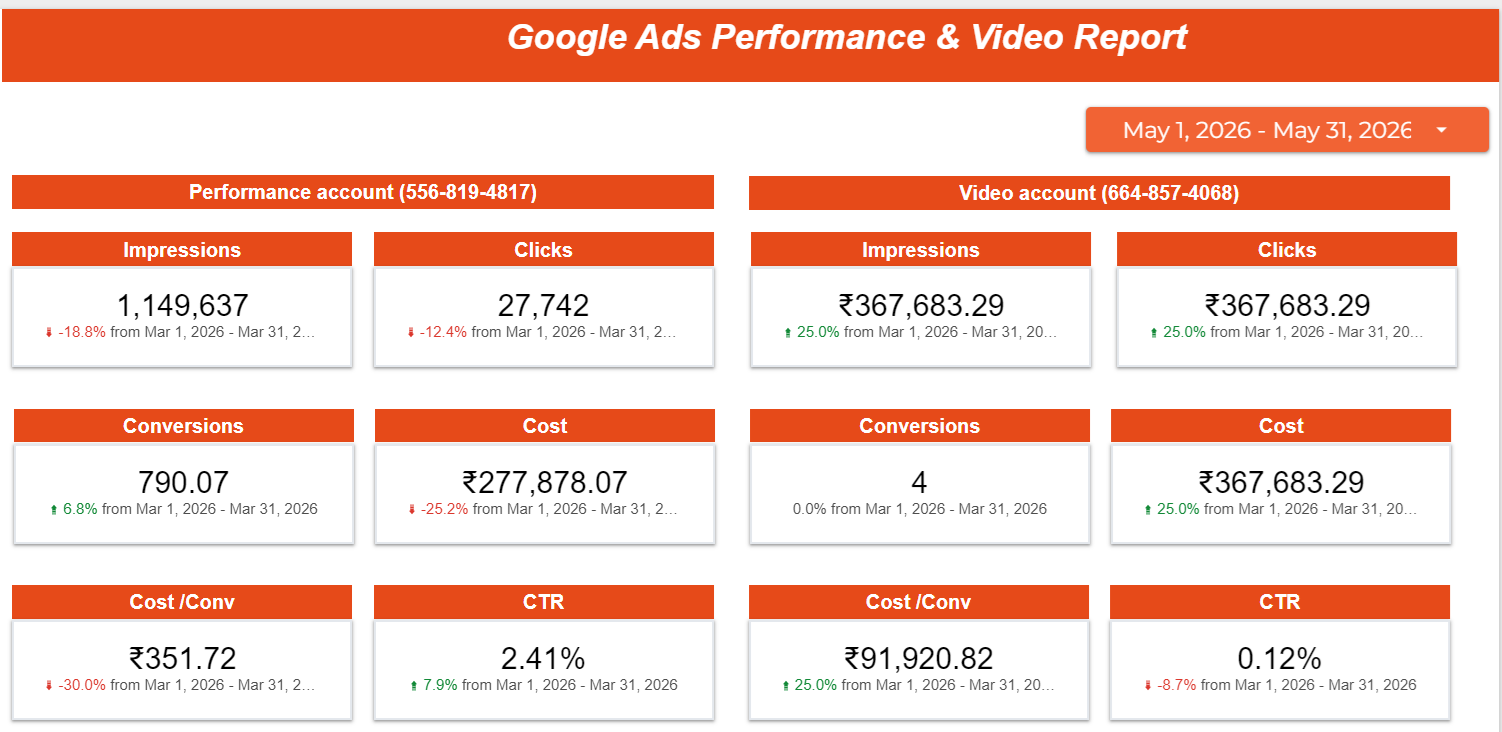
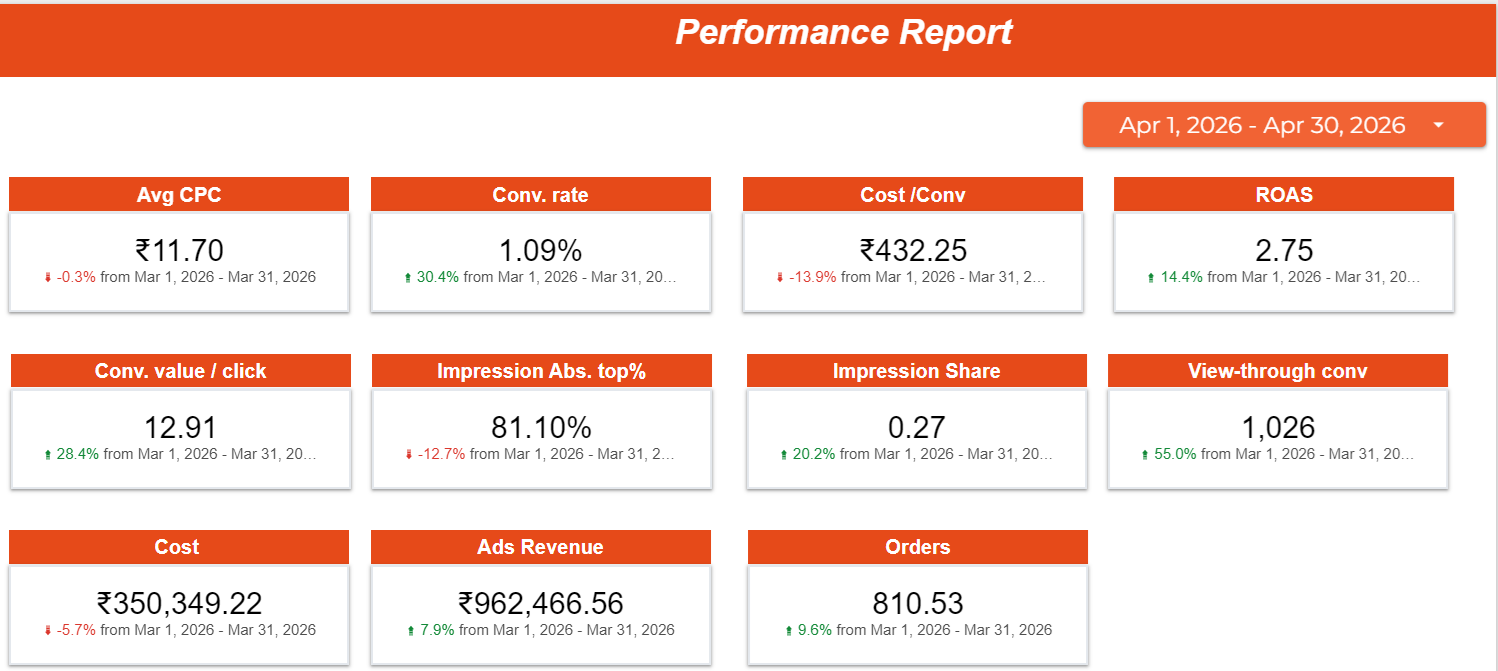
Learn how your campaigns are performing with VRankOne’s transparent monthly reports. Whether you’re getting new customers, what your CAC and ROAS are, and where your next rupee should go are all clearly highlighted in reports prepared by our team of professional PPC experts.
Ecommerce niches we partner with
Fashion
Struggling to keep every new collection visible? We keep your collections fresh and easy to find, so each drop builds on the last instead of starting from zero.
Jewelry
Big purchases need big trust. We shape your product pages and content to reassure buyers at the exact moment they're deciding whether to click "buy."
Skincare
Shoppers research before they buy and we know that very well. This is why we turn "will this work for me" questions into content that builds confidence and moves people toward the cart.
Furniture
These are slow, considered purchases. We make sure your site feels fast, clear, and easy to browse, so patience doesn't turn into a bounce.
Health & Wellness
As you know, trust is non-negotiable in this sector. We help your brand come across as credible and expert-backed, exactly what health-conscious shoppers look for.
Consumer Electronics
Can't shoppers find the specs and comparisons they need on your site? We help them compare confidently on your site, so they don't wander off to a marketplace to finish the job.
Pet Supplies
Not every product deserves equal attention. We steer visibility toward what actually drives revenue, so your best sellers get found first.
FMCG
Is your growing catalog making it harder for shoppers to find the right products? We simplify your site structure so bulk packs, variants, and multi-packs surface for relevant searches.
Fitness Equipment
Buyers don't just look at the listing. They compare, research, and look for reasons to choose. We give them detailed, comparison-ready content that wins them over before a generic listing does.
Hobby Supplies
Niche interests deserve to be found, isn’t it? That’s why we connect your specialty content to the right categories, so passionate buyers don't get lost in a big catalog.
Our clients say it best
The best part of our work? Hearing such nice things from our clients.
Your questions, our answers